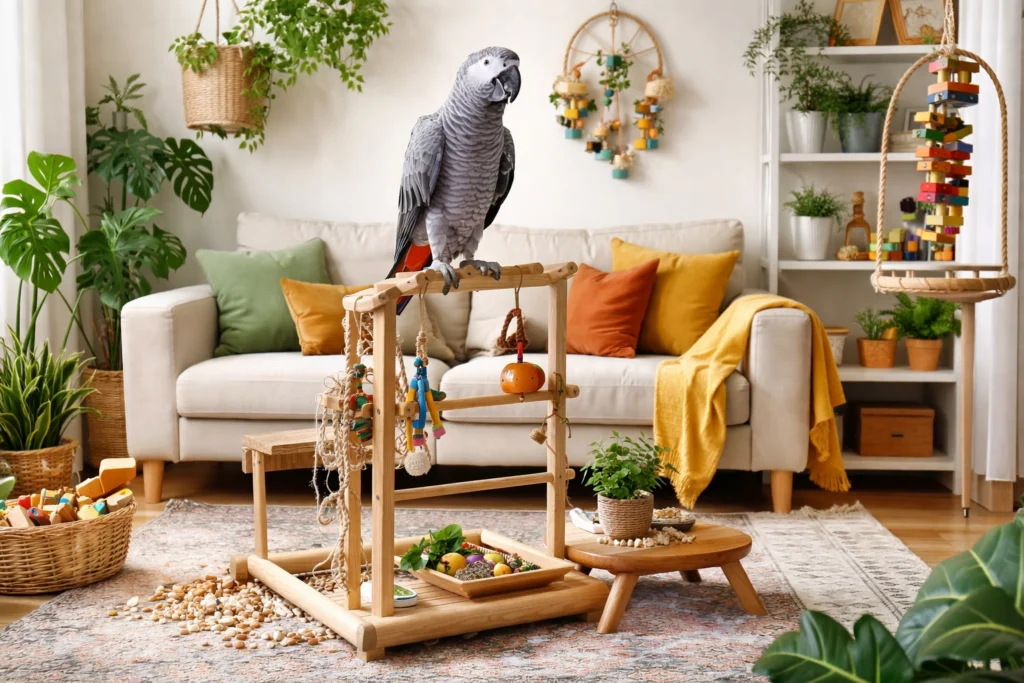
Let's be honest here. You didn't adopt a bird. You welcomed a tiny, feathered landlord into your home who now dictates everything from where you can place your houseplants to which corners of the couch are "theirs."
If you've ever caught yourself rearranging furniture around a cage, choosing curtains based on whether they can survive a good chomp, or explaining to guests why there's a play gym in the middle of your living room, congratulations. You're one of us.
So let's talk about what it really means to decorate your home when you share it with a parrot, cockatoo, or any other feathered chaos agent. Spoiler alert: it's less about Pinterest-worthy aesthetics and more about survival.
The Great Furniture Reckoning
Remember when you bought that nice velvet couch? Yeah, that was cute. Before the beak marks. Before the mysterious stains that you're pretty sure are sweet potato but you're not entirely confident about.
Here's the thing about living with birds: they don't understand the concept of "nice things." To them, your furniture is just another enrichment opportunity. That wooden coffee table? A giant chew toy. Those throw pillows? Preening stations. The back of your dining chair? A premium perch with a view.
So what do you do?
Well, you adapt. Bird people quickly learn to embrace furniture that can take a beating. Think washable slipcovers, metal or acrylic side tables, and chairs you're emotionally prepared to sacrifice. Leather might seem like a good idea until your African Grey decides it's the perfect surface for beak conditioning.
The real pro move? Designating specific furniture as "bird furniture." That one chair in the corner with the towel permanently draped over it? That's not laziness. That's strategy.
Wall-Mounted Everything (Because Floor Space Is a Myth)
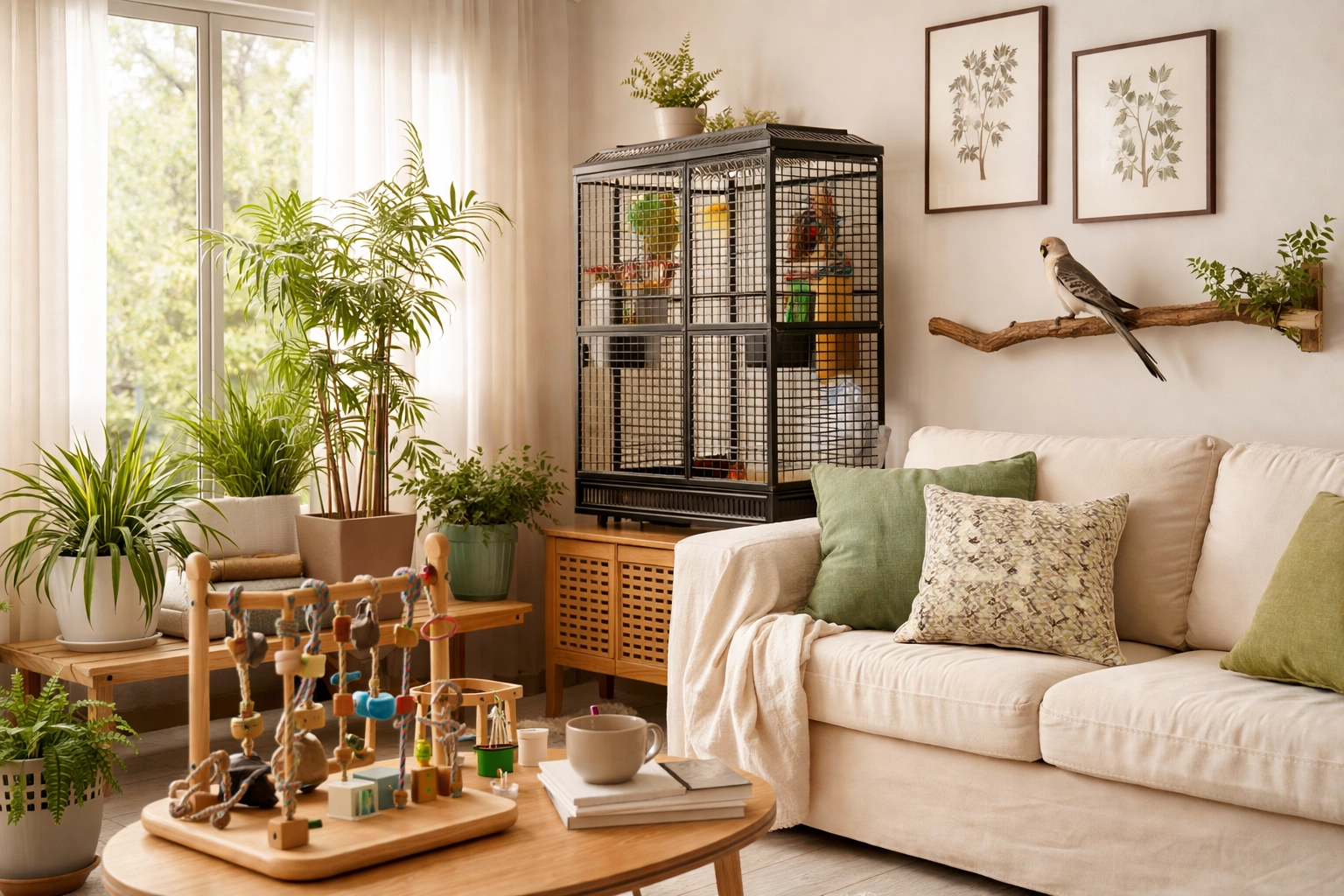
If you're working with limited square footage, or just tired of tripping over play stands, wall-mounted perches are about to become your best friend.
These vertical solutions give your bird more territory to explore without eating into your already-compromised floor space. Plus, there's something deeply satisfying about watching your cockatiel survey the room from their wall perch like a tiny, crested monarch.
You can get creative here. Rope perches, natural wood branches, even little shelves with non-toxic materials. Just make sure everything is securely mounted, because birds have a talent for testing structural integrity.
And while we're talking about walls, let's address the elephant in the room: wall art. If it's within beak reach, consider it a temporary installation. Either mount things high, use bird-safe materials, or accept that your décor will eventually feature "custom modifications" courtesy of your feathered interior designer.
The Plant Situation
Ah, plants. The eternal struggle of the bird owner who also wants to be a plant parent.
Here's the deal: many common houseplants are toxic to birds. Philodendrons, pothos, lilies, all gorgeous, all potentially dangerous. So before you fill your home with trendy greenery, you've got to do your homework.
The good news? There are plenty of bird-safe options that can still give your space that lush, lived-in vibe. Spider plants, Boston ferns, and bamboo are all safe choices. Some bird owners even propagate bamboo throughout their homes, it's affordable, grows quickly, and your bird can nibble on it without any emergency vet visits.
Just be prepared for your bird to treat any plant as a personal salad bar. That beautiful arrangement you carefully curated? It's enrichment now.
Storage Solutions That Actually Work
Let's talk about the reality of bird supplies. The pellets. The seed mixes. The endless parade of treats, toys, and foraging materials that somehow multiply when you're not looking.
If your current system involves bags shoved into cabinets and treats scattered across three different rooms, I feel you. But here's a simple upgrade that makes a huge difference: jars.
Seriously. Transferring your bird's food into clear glass or plastic jars not only looks better, it keeps everything fresher and makes your space feel more organized. Line them up on a shelf or inside a cabinet, and suddenly you've got a system instead of chaos.
For toys and accessories, consider bins or baskets that can slide into shelving units. The goal is to contain the bird stuff without making your home look like a pet store exploded. (No judgment if it does, though. We've all been there.)
The Dust. Oh, the Dust.
If you live with a cockatoo, cockatiel, or African Grey, you already know about the dust. That fine, powdery coating that appears on every surface within 24 hours of cleaning.
This is just life now.
These species produce powder down: a fine, keratin-based dust that helps with preening and feather maintenance. It's completely natural and healthy for them. For your furniture and your lungs? Less ideal.
The secret weapon here is a good HEPA air purifier. Not the tiny desktop kind: a real one with enough power to handle the output of a powder-down factory. Place it near the cage, run it consistently, and watch it become the hardest-working appliance in your home.
Regular cleaning also helps, obviously. Microfiber cloths are great for trapping dust instead of just pushing it around. And if you're really committed, a handheld vacuum near the cage area can be a game-changer for daily maintenance.
Creating Enrichment Zones
Here's where things get fun. Instead of fighting your bird's natural desire to explore, chew, and destroy, why not lean into it?
Designate specific areas of your home as enrichment zones. These are spaces where your bird is free to forage, play, and generally cause mayhem without you having to worry about your belongings.
A play stand in the living room with rotating toys. A foraging tray in the kitchen (away from cooking hazards, obviously). A window perch where they can watch the wild birds outside and judge them silently.
The key is giving your bird enough variety and stimulation that they're less interested in redecorating your bookshelves. It doesn't always work: birds are going to bird: but it helps redirect some of that energy.
And honestly? There's something really lovely about designing spaces specifically for your bird's enjoyment. It's a reminder that your home isn't just yours anymore. It's theirs too.
Embracing the Aesthetic
At some point, you have to stop fighting it and start embracing it. Your home is a bird home now. And that can actually be pretty cool.
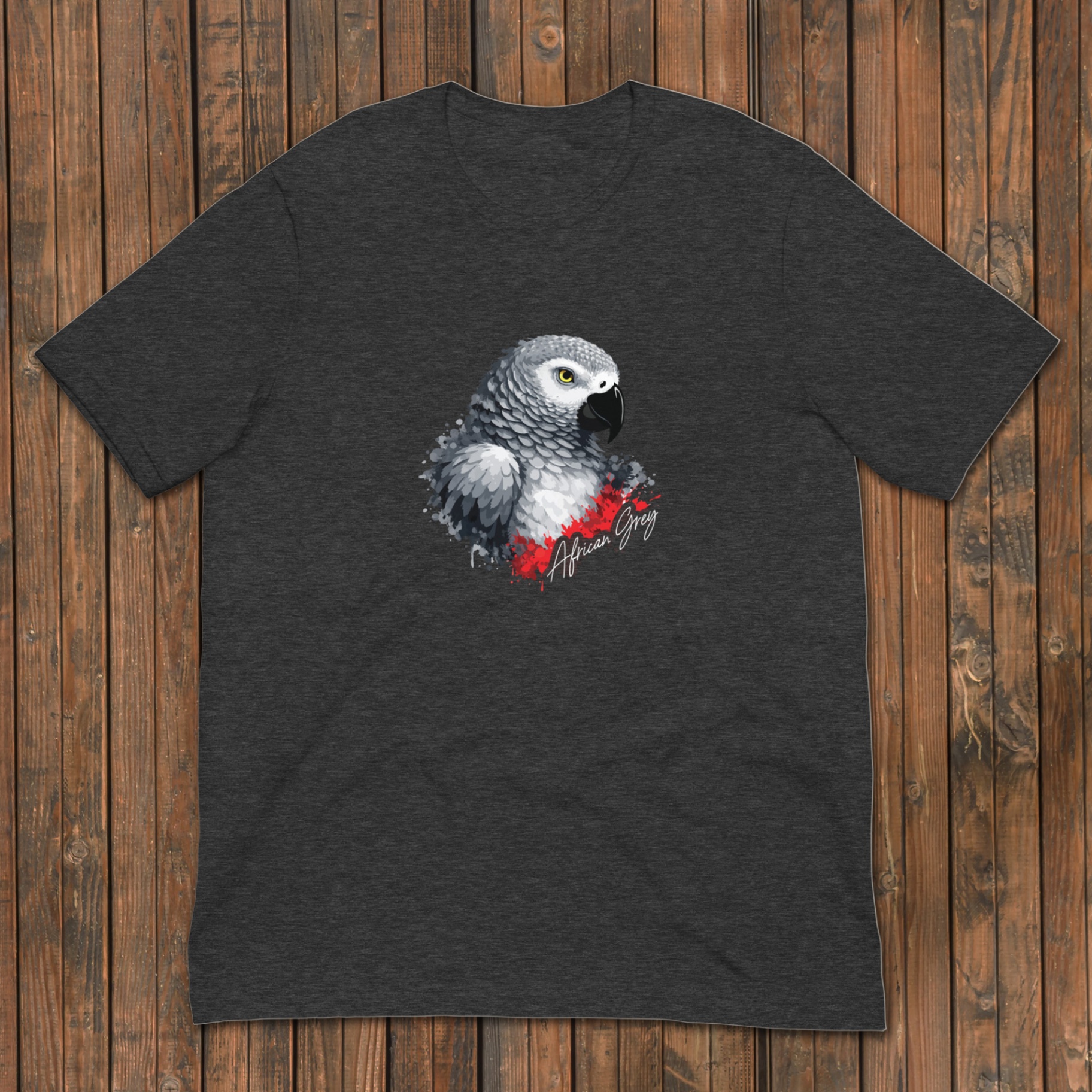
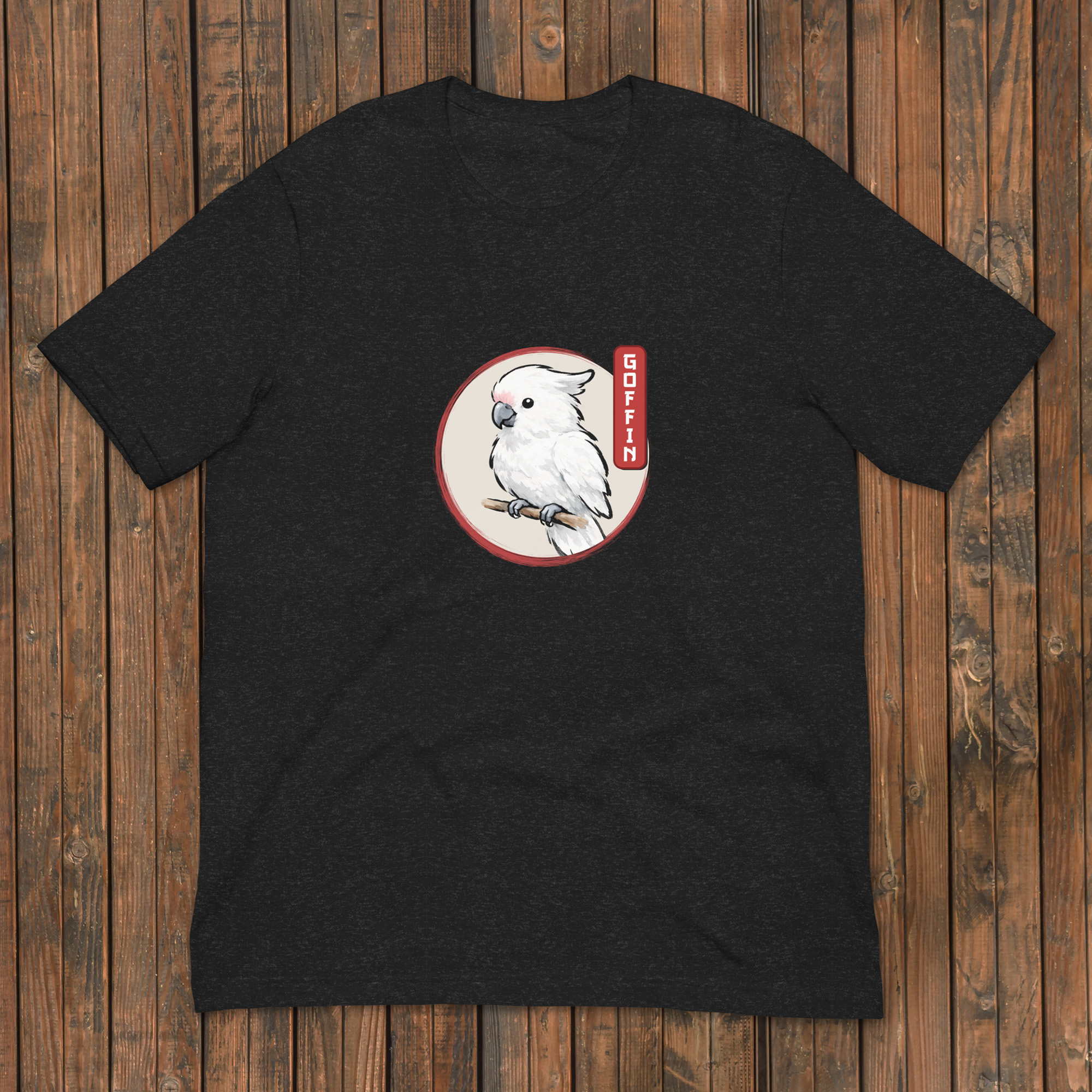
Lean into the bird life aesthetic. A cockatiel shirt draped over a chair. A bird-themed mug on the coffee table. Art prints featuring your favorite species. These little touches don't just celebrate your bird: they make the whole vibe feel intentional instead of chaotic.
Because here's the truth: anyone who walks into your home and sees a cage in the living room, a play gym by the window, and feathers on the couch? They already know what kind of person you are. You might as well own it.
Browse our full collection of bird shirts to find something that fits your flock: whether you're team African Grey, cockatoo, or something else entirely.
The Bottom Line
Decorating your home around your bird isn't about sacrificing style. It's about adapting your style to fit your reality. And that reality includes beak marks, feather dust, and furniture that's been claimed by a creature who weighs less than a pound but somehow runs the whole house.
It's chaotic. It's messy. It's absolutely worth it.
Got your own tips for parrot-proofing your space? We'd love to hear them. Come share your stories with us on Facebook and Instagram; we're always looking for new ideas from the flock.